What Is a Reasonable Price for a Blender?
May 06,2026
418
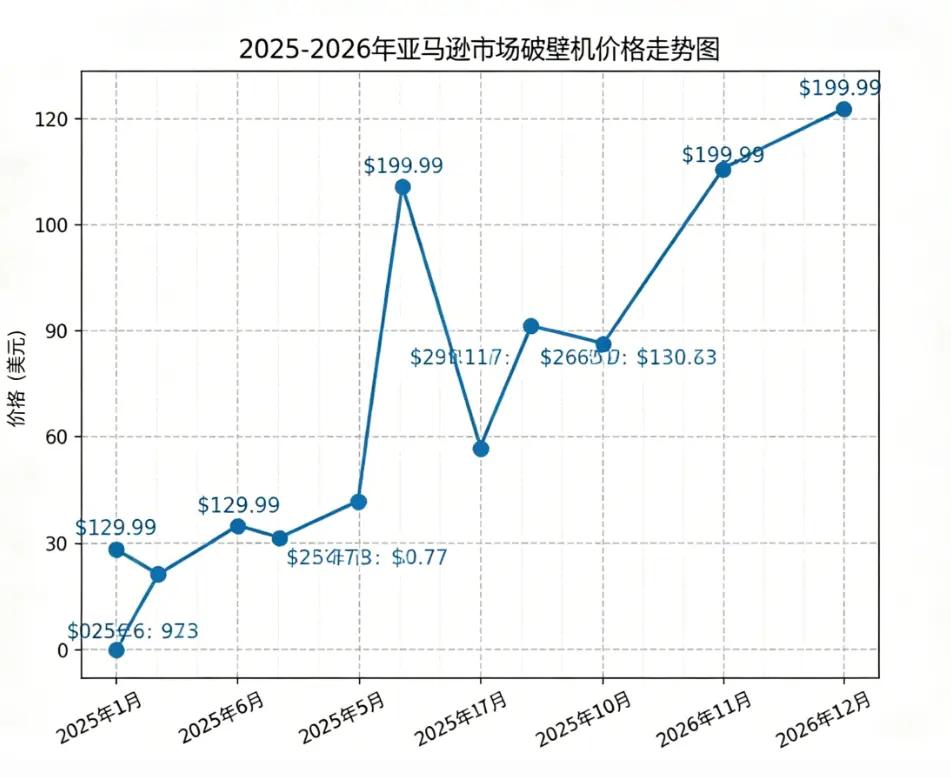
How much should you spend on a blender in 2026? With surging demand for healthy eating, blenders have become a standard appliance in every home kitchen. They break down the cell walls of ingredients to release nutrients, easily making soybean milk, rice paste, smoothies, baby food and more. However, market prices range from $300 to $500, leaving many buyers confused about the right budget. In fact, a higher price does not always mean better quality. The key is to match your budget with your needs and choose performance that fits your usage scenarios.
1. Mainstream Price Ranges & Positioning of Blenders
The blender market has clear price tiers, with different price points corresponding to varying performance, functions and user groups. They fall into three categories: entry-level budget models, mid-range $300–$800 models, and high-end models above $1000, each with unique advantages and drawbacks.
(1) $100–$300: Entry-Level Basic Models — Choose with Caution!
Most products in this range are off-brand units or low-end versions from major brands, positioned as low-cost essential options, commonly seen in e-commerce promotions and special offers.
Core Configuration: 500–800W power, speed below 20,000 RPM, ordinary plastic cups or thin glass cups (under 5mm thick), 4-blade regular steel blades, no noise reduction design, and limited functions (only soybean milk and rice paste).
Advantages: Extremely low price to meet basic "functional-only" needs. Suitable for short-term rental use, temporary needs or users on a tight budget.
Drawbacks & Pitfalls to Avoid:
Serious Spec Exaggeration: Marked at 30,000 RPM but drops sharply under actual load. Prone to jamming when blending nuts and hard beans, with poor breaking effect and excessive residue.
Safety Hazards: Low-grade plastic cups may release harmful substances when heated; thin glass cups are easy to crack. Motors lack overheat protection, with a service life usually under 1 year.
Extreme Noise: No sound insulation design, operating noise over 80dB, disturbing others if used early in the morning.
In a Nutshell: Avoid if possible. Only buy for short-term transitional use; otherwise, the follow-up maintenance and replacement costs will be higher.
(2) $300–$800: Mid-Range Mainstream Models — Best Value for Money (Top Choice for Most Families)
This price segment has the highest sales and best reputation. Core models from leading brands like Joyoung, Midea and Supor are concentrated here, balancing performance, safety, functions and price to fit the needs of 80% of households.
Core Configuration: 800–1200W power, 30,000–40,000 RPM (the optimal speed range for full nutrient breakdown), 5mm+ thick borosilicate glass cup (high temperature resistant, odorless and explosion-proof), 6–8 precision steel blunt blades (wear-resistant and full coverage), multi-layer noise reduction design (sound insulation cover & sound absorption ring, noise controlled at 55–65dB), with reservation, self-cleaning and hot & cold dual-mode operation.
Advantages:
Balanced Performance: Ultra-fine blending effect, residue-free soybean milk and smooth baby food. Easily handles hard ingredients like nuts and bones.
Safe & Durable: Food-grade materials, complete safety protection including motor overheat protection, anti-burn and anti-overflow design. 2+ years full machine warranty and 5 years for core components.
User-Friendly Experience: Noise kept around 60dB (normal conversation level). 12–24 hour appointment timing and one-touch self-cleaning, perfect for lazy users.
Sub-Range Recommendations:
$300–$500: Basic practical models (e.g. Joyoung L12-P203, Midea PB4G3-555). Ideal for small families of 1–3 people with full core functions and great value.
$500–$800: Flagship upgraded models (e.g. Joyoung L15-P688, Supor zero-coating version). Featuring zero-coating healthy design, low noise (45–55dB) and large capacity (1.5–1.75L), perfect for big families of 3–5 members and households with the elderly or babies.
In a Nutshell: Worry-free purchase. Most families should choose this range to enjoy premium blending performance without overspending.
(3) Above $800: High-End Flagship Models — Buy as Needed
Models over $800 are mostly brand flagships or imported units (e.g. Westinghouse, Blanpod, Morphy Richards), focusing on ultimate experience, innovative technology and premium texture. Suitable for quality-oriented users with sufficient budget or special requirements.
Core Configuration: Variable frequency brushless motor (1200W+), speed over 40,000 RPM, thickened borosilicate glass / zero-coating stainless steel cup, 8+ dragon-tooth steel blades, multi-layer noise reduction + variable frequency shock absorption (45–55dB, library-level quiet), smart connectivity, steam self-cleaning, and integrated grinding, juicing and stewing functions.
Advantages:
Top-Tier Experience: Finer blending, lower noise and more stable operation. Handles large portions of hard ingredients effortlessly, ideal for long-term frequent use.
Upgraded Health Performance: Zero-coating and food-grade materials with no substance precipitation under high heat, safer for making baby food and health drinks for the elderly.
Premium Build & Durability: Heavy body (5kg+), exquisite craftsmanship. Variable frequency motors last 5–10 years with reliable after-sales service.
Drawbacks: High price with obvious function premium. Some features like smart connectivity are rarely used daily, offering lower cost performance than mid-range models.
In a Nutshell: Only choose if budget is ample and you pursue ultimate experience. Ordinary families do not need to follow the trend blindly.
2. Core Parameters That Determine Price: Avoid False Specs & See the Essence
Many buyers only focus on price while ignoring core parameters, ending up with overpriced low-performance products or falling for cheap inferior ones. Essentially, price differences come down to core configuration gaps. Master these 4 key parameters to judge whether the price is reasonable.
(1) Motor: The Core Heart Determining Performance & Lifespan
The motor is the most valuable part of a blender; power, speed and type directly affect the price.
Power: 800–1200W is sufficient for home use. Models under $300 mostly have exaggerated 500–800W output; models above $800 adopt 1200W+ variable frequency motors.
Speed: 30,000–40,000 RPM is the golden range. Speed below 30,000RPM results in poor blending; over 40,000RPM brings louder noise and higher power consumption, unnecessary for daily use.
Motor Type: Brushed motors ($300–$500, lifespan 1–2 years); brushless variable frequency motors (above $800, lifespan 5–10 years, quiet and stable).
(2) Cup Body: Safety First — Material Decides Price
The cup contacts ingredients directly; material and thickness impact safety and pricing, with clear gaps between budget and mid-to-high-end models.
Borosilicate Glass (Mid-Range Mainstream): 5mm+ thickness, resistant to 600℃ temperature difference, odorless and explosion-proof, reasonably priced, top choice for home use.
Zero-Coating Glass / Stainless Steel (High-End): Healthier with no coating, high temperature and corrosion resistant, costing $200–$300 more than ordinary glass.
Ordinary Plastic (Budget Models): Low cost yet prone to deformation and releasing harmful substances under high heat — definitely avoid.
(3) Blade Head: Key to Blending — Design Matters More Than Quantity
Blades determine blending fineness; material, blade count and design affect pricing. More blades do not always mean better performance.
Material: 304/316 precision steel (mid-to-high-end, wear and corrosion resistant); ordinary stainless steel (budget models, easily dulled).
Blade Count: 6–8 blades work best. 4 blades (budget, uneven blending); 10+ blades (gimmick, easy to jam).
Design: Blunt blades (mid-to-high-end, full coverage and anti-jam); sharp blades (budget, easy to dull and leave residue).
(4) Noise Reduction: Core User Experience — Lower Noise Means Higher Price
Noise is a major pain point for home use; more noise reduction features mean a higher price.
Entry-Level (Under $300): No noise reduction, noise over 80dB, disturbing neighbors.
Mid-Range ($300–$800): 1–2 layer sound insulation cover plus sound absorption ring, noise 55–65dB, acceptable for daily use.
High-End (Above $800): Multi-layer noise reduction + variable frequency shock absorption + silent air duct, noise 45–55dB (library-level quiet), usable early morning or late at night without disturbance.
3. Price Recommendations for Different Users: Buy Based on Needs & Avoid Wasting Money
(1) Singles / Renters (1–2 People): $200–$400
For limited budget and low frequency of use, choose mini models (0.8–1.2L), basic functions and mild noise design (e.g. Bear PBJ-M04R3, Joyoung L12-P203). Meets demands for soybean milk, rice paste and smoothies with excellent value.
(2) Small Families (3–4 People): $400–$600
For daily frequent use and high experience demands, pick 1.2–1.5L capacity, 5mm borosilicate glass, 6–8 precision steel blades, multi-layer noise reduction, reservation & self-cleaning (e.g. Midea PB4G3-555, Joyoung Y915S). Balanced performance, safe and long-lasting.
(3) Large Families / Households With the Elderly & Babies (5+ People): $600–$800
For health pursuit and fine taste needs, select 1.5–1.75L large capacity, zero-coating, low noise (45–55dB), steam self-cleaning and multi-function menu (e.g. Joyoung L15-P688, Supor zero-coating version). Perfect for making baby food, health soybean milk and thick soup.
(4) Quality-Focused Users / Ample Budget: $800–$1500
For ultimate experience and long-term heavy use, go for brushless variable frequency motor, thickened zero-coating cup body, library-level quiet, smart connectivity and all-in-one functions (e.g. Blanpod BP-PBC07, Westinghouse brushless model). Premium texture and strong durability.
4. Summary: Reasonable Price = Budget Matches Needs & Performance Fits Scenarios
There is no one-size-fits-all perfect price for blenders — only the right choice for yourself.
VONCI reminds you of 3 core shopping tips: do not blindly chase high-end models, do not fall for cheap inferior products, and ensure core parameters (motor, cup body, blade, noise reduction) meet standards.