
VONCI Sauce Dispenser Introduction
Sep 07,2026
343
VONCI originates from China’s commercial foodservice equipment manufacturing sector. We engineer professional back-of-house gear for foodservice, bakeries, tea & coffee brands across the globe. Our products sell widely on Amazon and cross-border B2B marketplaces and enjoy strong recognition among foodservice operators overseas.
I. Importance of Commercial Thermostatic Sauce Dispensers in Modern Foodservice Operations
As chain restaurants, bakeries, coffee & beverage shops, hot dog & burger kiosks, and dessert stores pursue operational standardization, sauces have become critical to flavor profiles, product premiumization, and brand differentiation. Chocolate ganache, cheese sauce, caramel, peanut butter and similar items are temperature-sensitive high-viscosity materials. Their physical properties shift drastically with temperature drops, thickening rapidly and forming solid clumps. Overheating causes oil separation, sugar caramelization, flavor degradation, and accelerated microbial growth. Traditional kitchens rely on heated soup kettles, water baths, or simple warmers paired with manual ladling, which creates multiple operational pain points.
First, elevated food safety risks. Open warmers expose sauces to repeated ladling, transferring bacteria from hands and utensils into the product. When held warm over long shifts, dairy-based cheese sauces easily develop pathogenic bacteria and fail foodservice compliance. Open containers also collect dust and debris, contaminating ingredients and triggering health department fines and customer complaints.
Second, loss of portion control and inconsistent output. Manual ladling creates huge variations in sauce volume per serving. Portion inconsistency across shifts and staff directly hurts flavor consistency, cost calculations, and customer experience. For multi-location chains, inconsistent hand-portioned sauce ruins uniform quality and damages brand reputation.
Third, excessive ingredient waste and high material costs. Ladling causes drips and leftover residue. Exposed sauce forms a hardened skin on contact with air, which must be discarded. Premium cheese and chocolate sauces carry high raw-material costs; cumulative waste eats away gross margins over time.
Fourth, slower kitchen labor productivity. During rush hours, employees juggle ladling, portioning, and wiping containers, creating a bottleneck for order fulfillment. Container cleanup is labor-intensive and adds extra working hours after closing.
Fifth, poor sauce stability. Basic water-bath warmers lack precise temperature regulation, creating hot spots and uneven heating. Chocolate blooms and separates; cheese sauces split; flavor fades fast and shortens usable holding time.
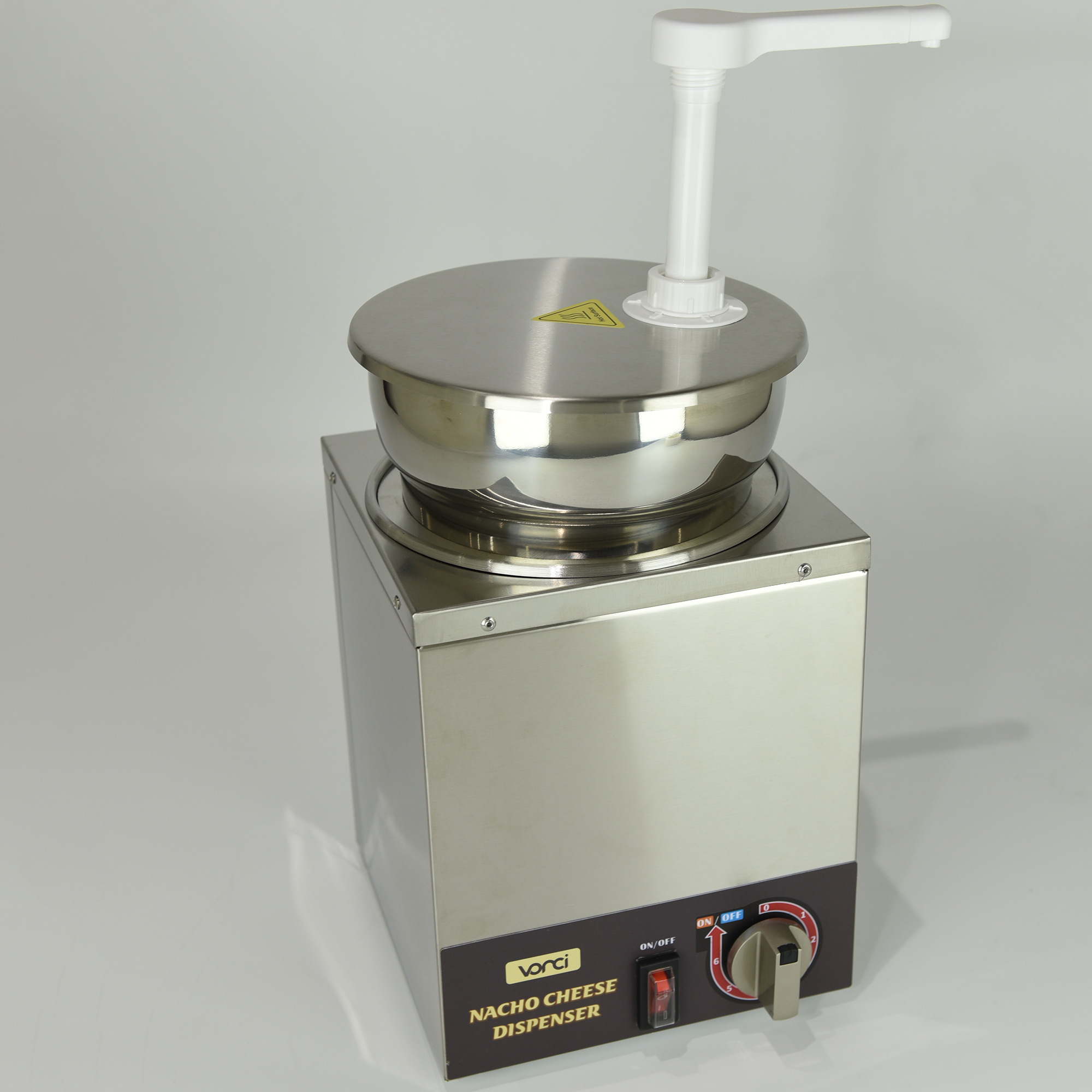
The VONCI sauce dispenser solves these industry challenges using a jacketed water-bath heating principle. It never heats the sauce tank directly; water transfers heat gently and evenly. A food-grade pump delivers contact-free dispensing with built-in suck-back anti-drip design that pulls sauce back immediately after pumping to stop dripping. Three core operational benefits include improved food safety, consistent portioning, and lower store operating costs.
For food safety: The sealed inner tank limits sauce exposure to air and staff hands. A stable holding range keeps materials within safe temperature zones to slow pathogen growth. All sauce-contact components detach fully for breakdown, cleaning and sanitizing. The unit complies with HACCP food safety systems for domestic foodservice and meets overseas NSF sanitation standards for food equipment.
For consistent serving portions: The pump delivers a fixed amount per stroke. Shops create standardized SOPs by defining pump strokes per menu item, ensuring identical servings across shifts and multiple locations for centralized chain quality control.
For cost savings and efficiency: Sealed storage reduces skin formation, and suck-back pumping cuts ingredient waste. Pump dispensing simplifies staff workflows and speeds up order flow during peak service. Modular removable parts reduce daily cleaning and sanitizing time. For chain locations, the equipment pays for itself quickly through ingredient savings and labor reduction.
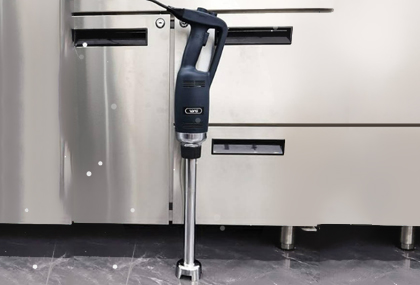
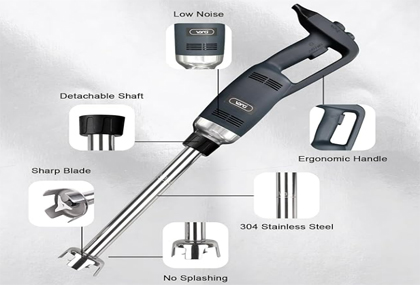
This compact countertop unit has a small footprint, fitting neatly on bar tops and prep stations with no kitchen remodeling required. It is a foundational piece for standardization in quick-service foodservice. Important distinction: A sauce dispenser is not the same as an immersion homogenizing sauce mixer. Mixers emulsify, blend and grind raw sauces; this machine stores finished sauces at temperature and dispenses controlled portions for service after sauce production. The two serve entirely separate functions and must not be confused during procurement.
II. Full Model Lineup & Specification Breakdown for Sauce Dispensers
VONCI sauce dispensers feature the 2.5L standard single-tank model as our core ready-to-ship product. Multi-tank and higher-capacity custom builds are also available. Within the same main housing, two base variants are defined by pump material: VC-NCDS1-2.5LSSP with stainless steel pump and VC-NCDS1-2.5LPP with food-grade PP plastic pump. The cabinet, inner tank, temperature controls and water bath chamber are identical for both. The pump material difference determines compatible sauce types, service life, corrosion resistance and purchase cost. Custom twin-pump, triple-pump multi-tank versions plus 5L and 10L large single-tank units are offered on request. Custom units are non-stock and subject to minimum order quantities.
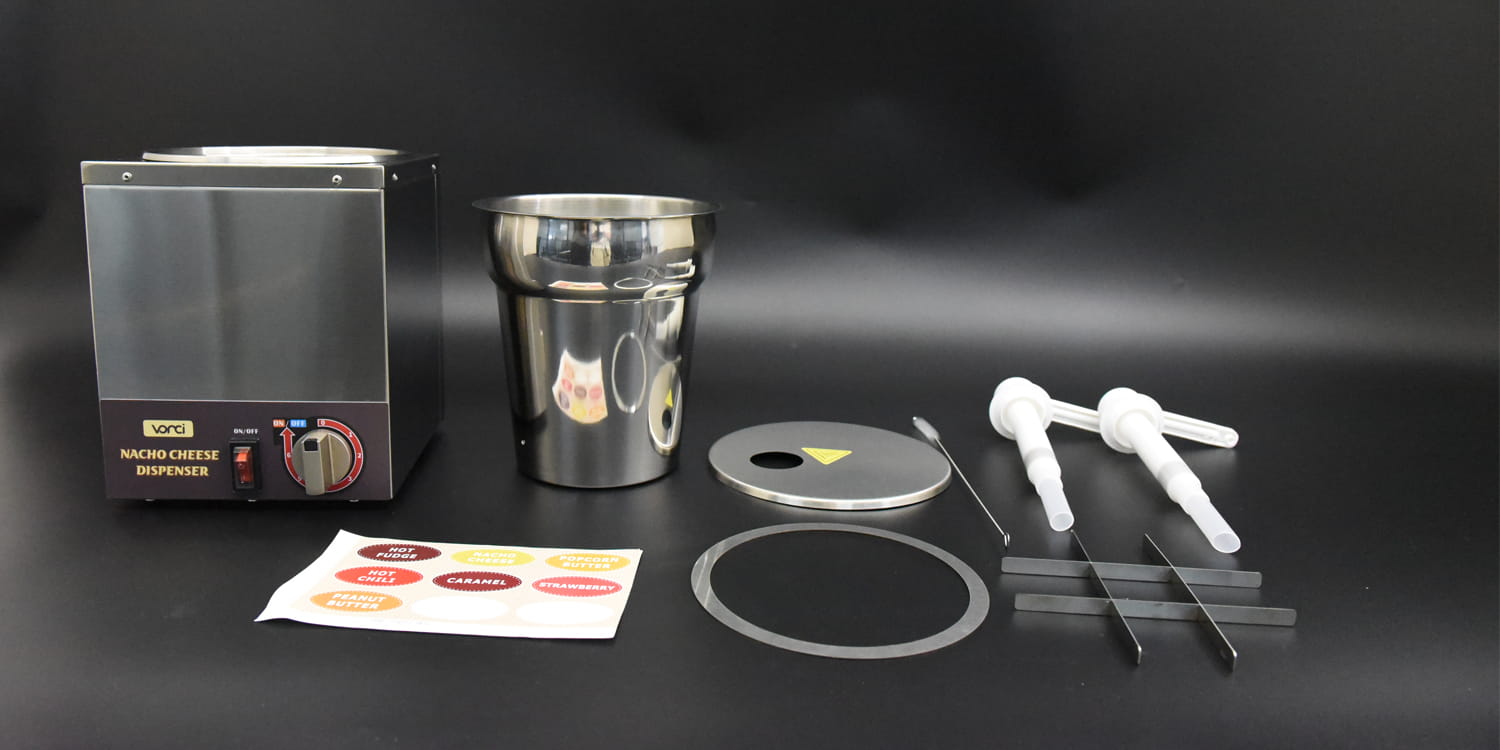
(1) Spec Sheet for Standard In-Stock Models
Model 1: VC-NCDS1-2.5LSSP (Commercial Standard with Stainless Steel Pump, Primary Selling Model)
Rated tank capacity: 2.5L (2.8QT). Recommended working volume: 0.5–2.2L. Do not fill to the top; leave space for thermal expansion.
Overall unit dimensions: 193mm L × 193mm W × 400mm H
Tank material: Food-grade 304 stainless steel, polished interior for minimal sauce adhesion and simple cleaning.
Water bath jacket: 304 stainless steel jacketed water chamber with indirect heating to eliminate dry-burn scorching.
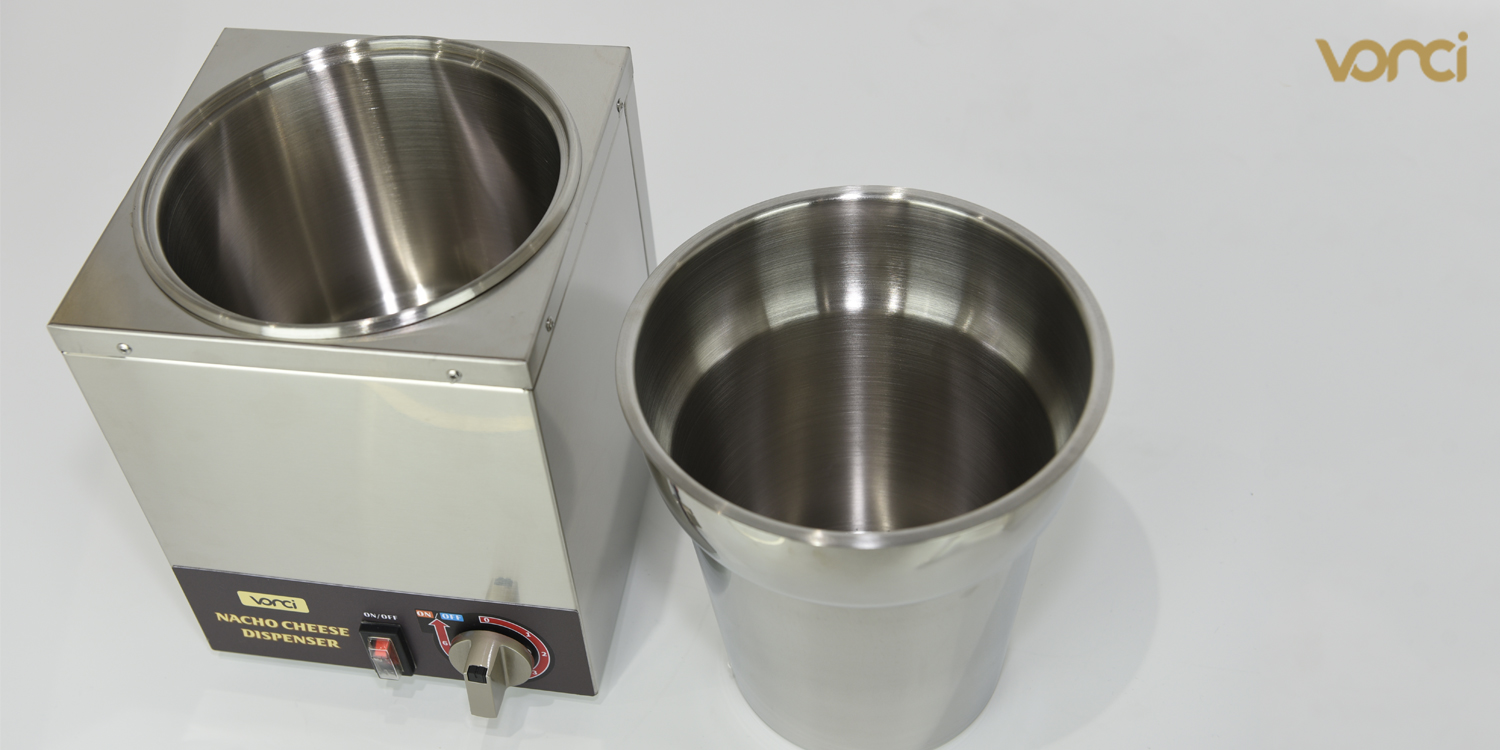
Pump head material: Food-grade 304 stainless steel pump and piston assembly, food-grade silicone gaskets.
Temperature control: Mechanical stepped thermostat with six adjustable heat settings, 30℃~87℃ operating range.
Temperature accuracy: ±3℃. Water-bath heat transfer creates uniform tank temperature with no hot spots.
Power supply: Standard 220V/50Hz domestic version; 110V/60Hz US-spec export version. Voltage must be confirmed before ordering.
Rated power: 300W
Dispensing mechanism: Manual push pump with suck-back anti-drip valve. Fixed output per stroke, roughly 8–10g per pump (minor fine-tuning available).
Outer housing: Brushed stainless steel casing, oil-resistant, corrosion-resistant and built for heavy commercial wear.
Compatible materials: High-viscosity cheese sauce, chocolate sauce, caramel, peanut butter, cream-based toppings. Built for continuous high-volume operation; resistant to oil and mild acid corrosion with low wear, ideal for busy high-turnover locations.
Net weight: 5.8kg
Model 2: VC-NCDS1-2.5LPP (Economy Version with PP Plastic Pump)
Housing, inner tank, water bath chamber, temperature specs, dimensions, wattage and voltage match VC-NCDS1-2.5LSSP. Only difference:
The main pump body is food-contact polypropylene (PP), paired with food-grade silicone seals.
Benefits: Lower upfront purchase price and slightly lighter unit weight.
Limitations: PP plastic swells and wears over prolonged contact with hot oils and cocoa butter. Under sustained high heat, caramel and chocolate residue bake onto pump walls, shifting portion accuracy as parts degrade. Service life is shorter than stainless steel pumps. Best suited for low-volume intermittent use and small shops on tighter budgets. Not recommended for continuous extended holding of cheese or chocolate sauces.
(2) Custom Series Description
Dual-tank model VC-NCDS2-2.5L×2: Two independent tanks, two pump heads and separate temperature controls to hold two different sauces at once. Perfect for dessert shops and hot dog stores storing chocolate and cheese sauce side-by-side. Larger footprint, rated 600W with independent temperature control for each tank.
Custom large-capacity single tank: 5L and 10L variants for central prep kitchens and large buffet lines. Longer lead time, not stocked locally.
Voltage customization: Multi-country voltage options with EU, UK and AU plug selections.
LOGO customization: Laser-engraved brand marking on cabinetry for chain brand bulk orders.
(3) Material Compatibility Guidelines (Critical for Proper Selection)
This sauce dispenser works with thick paste-style sauces without large hard particulates. Tiny fruit pulp or cocoa particles are acceptable. Sauces containing big meat chunks, nut fragments or rigid solids are prohibited. Hard particles scratch pump interiors, tear silicone gaskets, jam the pump and cause leaking. For meat sauces or coarse particulate toppings, select rotor pump-style dispensers instead of this unit.
III. Compliance & Certification Overview
The VONCI sauce dispenser is an export-ready commercial food-contact appliance with region-specific compliance documentation covering electrical safety and food-contact material standards. Certificates are available for procurement, customs clearance and health department inspections.
Food Contact Material Testing
All sauce-wetted components (304 tank, stainless steel pump, PP pump and silicone gaskets) pass food-contact material testing. Domestic units meet China GB 4806 standards; export versions comply with FDA food contact requirements. Material reports for tanks and pumps are supplied with orders.
Electrical Safety Certifications
Domestic 220V model: CCC mandatory certification, valid for commercial store use and regulatory audits inside China.
US 110V version: ETL safety listing to meet North American commercial electrical requirements plus NSF/ANSI 2 food equipment sanitation certification, mandatory for commercial foodservice acceptance in the US.
EU version: CE certification (LVD Low Voltage + EMC Electromagnetic Compatibility).
DOE Energy Efficiency Certification
North American export models carry DOE energy efficiency certification to satisfy US market energy consumption entry requirements.
Important Notes
Certifications correspond strictly to specific models and voltage variants. For purchases inside China, confirm suppliers provide the CCC certificate matching the 220V domestic unit. Avoid buying 110V overseas models for local commercial use; these require transformers and will fail regulatory equipment audits. Scan copies of all certificates can be requested from suppliers for bidding, chain procurement and equipment receiving reviews.
IV. Applicable Industries & Use Cases
The VONCI sauce dispenser is built for commercial foodservice dispensing, designed for locations needing consistent heated flavor toppings.
Cafés & Beverage Shops
Caramel, chocolate and cheese drizzles for coffee toppings, ice cream and milk foam finishes. Countertop placement supports fast order assembly.
Bakeries & Dessert Shops
Chocolate glaze, pastry cream and nut toppings for desserts, waffles and crêpes.
Snack Kiosks, Hot Dog & Burger Shops
Cheese sauce and BBQ sauce for hot dogs, potato towers and french fries.
Buffet restaurants & grocery tasting stations: Continuous small-batch warm sauce service.
Food R&D labs and product test kitchens: Sauce formulation testing to observe material stability under controlled heating.
Not suitable for: ① Sauce cooking, emulsification or blending (mixing equipment is required for sauce production; this unit only stores and dispenses finished product); ② Sauces with large solid meat particles; ③ Extra-high-viscosity cold sauces intended for ambient use with no warming; ④ Large-scale industrial filling lines. This is a compact countertop end-user machine for foodservice locations, not industrial filling machinery.
V. Standard Operating SOP
5.1 Pre-Startup Inspection (Before Each Shift)
Step 1: Inspect power cords and plugs for damage and confirm proper grounding. Never power on if wiring is damaged.
Step 2: Disconnect power. Open the water bath fill port and add purified or softened water into the jacket chamber to the marked level. Dry firing is strictly forbidden. Do not start heating if water sits below the minimum line. Regular tap water is not recommended long-term; mineral buildup coats heating elements, reduces efficiency and damages components.
Step 3: Disassemble the pump assembly and inspect silicone gaskets for cracks, tears or displacement. Do not operate with missing or damaged seals, which directly cause leaks.
Step 4: Clean the inner tank and remove leftover sauce residue from prior use. Dry fully before reinstalling.
Step 5: Add pre-heated finished sauce into the tank. Do not exceed the maximum fill mark; keep volume under 2.2L. Placing cold refrigerated sauce inside for gradual heating is discouraged. Slow warming keeps sauce within the microbial danger zone (40℉–140℉ / 5℃–60℃) and raises food safety risk. Best practice: Preheat sauce near target temperature before transferring into the tank.
Step 6: Fit the sealed tank lid and verify the pump head is securely installed with no looseness.
5.2 Power-On Setup & Temperature Calibration
Connect power and flip the unit switch, then adjust thermostat settings for your sauce type. Recommended target temperatures: Chocolate sauce 45–55℃; cheese sauce 55–65℃; caramel sauce 60–70℃; peanut butter 58–68℃. The water bath heats gradually for roughly 20–30 minutes until sauce reaches set temperature. Use a food probe thermometer to verify actual sauce temperature and confirm stability before service.
5.3 Dispensing Operation
Operators press the pump head downward to draw sauce into the pump chamber. Release pressure to dispense. Suck-back stops sauce dripping once pumping finishes. Each press delivers a fixed portion; set pump stroke counts per menu item per store SOP. Check the water bath level every 1–2 hours during use and top up softened water when low. Gently stir sauce in the tank periodically to prevent surface skinning and sediment at the bottom.
Critical safety rules: Never remove the pump or tank while powered on. Avoid touching hot surfaces on the water bath and tank exterior. Do not spray or submerge the main housing and electrical base directly with water; water intrusion into electronics causes short circuits.
5.4 Shutdown Procedure (At Closing)
Turn off power and unplug the unit. Let the entire machine cool fully to room temperature (minimum 60 minutes) before disassembly and cleaning. Do not remove tank or pump while hot; hot sauce creates burn hazards. Dispose or refrigerate leftover sealed sauce following food safety protocols. Never leave sauce inside the tank for overnight warm holding.
VI. Tiered Maintenance Program: Daily, Weekly, Monthly & Annual Service
Service life, temperature stability and pump accuracy depend entirely on routine maintenance. As a food-contact appliance, maintenance addresses both machine function and sanitization requirements.
6.1 Daily Maintenance (Mandatory After Closing)
(1) After powering down and cooling, take apart the pump fully: piston, pump chamber, silicone gaskets and nozzle all separate.
(2) Remove the inner tank. Wash all sauce-contact components with warm water and food-grade alkaline dish detergent. Use soft brushes to clear residual sauce inside pump cavities. Avoid steel wool or abrasive scrubbers; scratches on 304 stainless steel or PP trap biofilm and bacteria and make future cleaning harder.
(3) Rinse thoroughly to eliminate detergent residue, then soak parts in food-grade sanitizer for the duration specified by sanitizer instructions, generally 30–60 seconds.
(4) Remove all components and place on a sanitized drying rack for air drying. Do not wipe with towels; fabric fibers and bacteria cause recontamination. Store parts only after fully dry; never reassemble wet.
(5) Wipe down the outer cabinet surface to remove splattered sauce and grease. Clear debris from the water bath and check water quality.
(6) Daily inspection checklist: Check gaskets for tears, deformation or loss of elasticity. Replace seals immediately once damaged.
6.2 Weekly Deep Maintenance
1. Water bath descaling: Continuous heating creates mineral scale coating heating elements, leading to inaccurate temperature control and burnout. Prepare descaling solution (food-grade descaler or vinegar-water mix), pour it into the water bath, run at low heat for 30 minutes. Power down, cool, drain and flush repeatedly with clean water to remove scale. Increase frequency if heavy mineral buildup occurs.
2. Full pump disassembly and deep soak cleaning to remove baked caramel and carbonized chocolate deposits trapped in small gaps.
3. Inspect power cords, plugs and cabinet screws for looseness.
6.3 Monthly Maintenance
1. Temperature calibration: Use a calibrated food probe thermometer to measure actual sauce temperature inside the tank and compare against unit setting. Contact service technicians for thermostat adjustment if deviation exceeds ±5℃.
2. Pump performance test: Press the pump repeatedly and check dispensing consistency. Watch for variable portions, leaks or failed suck-back. Pump wear shifts per-stroke output and breaks portion standardization.
3. Full inspection of silicone seal aging. Seals are consumable spare parts; maintain gasket inventory on hand.
6.4 Annual Inspection
Authorized service technicians or certified electricians run full electrical safety checks on heating elements, thermostats and wiring insulation. Replace aged heating components and worn seal kits, and complete a full performance evaluation.
Tips to Prevent Failures
Silicone gaskets and pump pistons are standard wear items; shops should keep spare parts stocked. Stainless steel pumps typically last 2–3 years with proper care. PP pumps generally require replacement every 6–12 months.
Avoid harsh acidic or alkaline cleaners. Never run the unit dry. Do not load sauce with large hard particles. Never spray or submerge the electrical base.
For long-term storage after extended downtime: Fully clean, sanitize and air-dry all components, then store in a dry ventilated location to stop mold growth on gaskets in humid environments.
Selection Risk Reminder
The VONCI sauce dispenser is specialized equipment for foodservice standardization. The most common procurement error is confusing sauce mixers (for blending and homogenizing raw sauces) with heated sauce dispensers (storage and pump dispensing). The two serve completely separate functions; confirm equipment purpose before purchase.
Selection guidance: For high-volume continuous service, primarily cheese and chocolate sauce, choose VC-NCDS1-2.5LSSP stainless steel pump version for superior long-term stability and longer consumable replacement cycles. Small shops with intermittent use and limited budget can select the VC-NCDS1-2.5LPP plastic pump variant, but plan ahead for pump wear and budget for spare parts.
From a long-term operational perspective, a sauce dispenser is not a one-time purchase. It requires standardized SOPs, periodic maintenance and stocked replacement sealing components.