

How Powerful Is a Stand Mixer?
Oct 14,2026
11
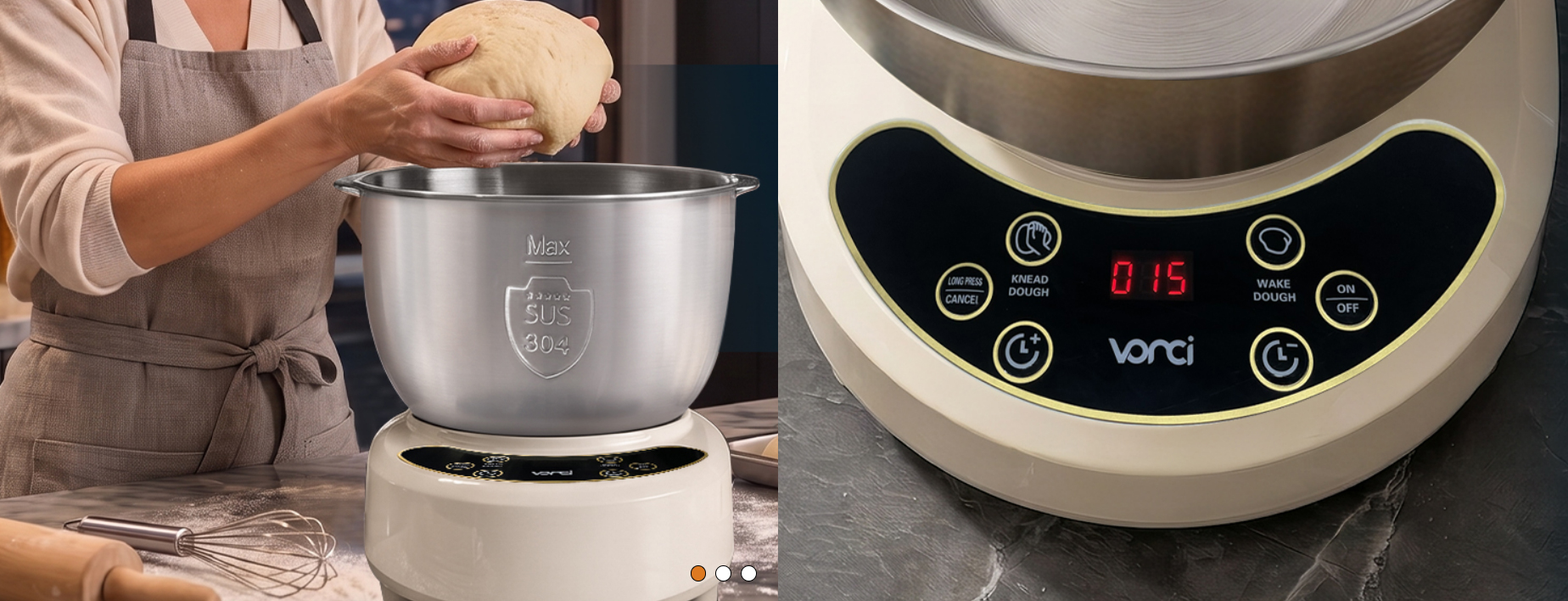
For many home bakers who make bread and dumplings, a stand mixer is the most effortless "dough-kneading partner" in the kitchen. However, when using appliances in the US for the first time, many people wonder: how much electricity does this machine actually draw? Are US outlets the same as Chinese ones? How can it be used safely?

I. How Much Power Does a Stand Mixer Need?
A stand mixer’s power consumption is determined by two measurements: Volts and Watts.
The standard household voltage in the United States is 120V at 60Hz, which is completely different from mainland China’s 220V. This is why stand mixers brought from China often cannot be used directly — a voltage mismatch may slow the motor down at best, or burn it out at worst.
The power ratings of common home stand mixers fall roughly into three tiers:
Entry-level / Light-duty (around 4.5 quarts): about 250–300W, suitable for occasional kneading of small batches of dough.
Mid-range standard size (around 5 quarts, e.g., KitchenAid Artisan): rated at approximately 325W with a rated current of 2.7A. This is the most common model in American households.
Commercial / Professional grade (6–7 quarts): motor power can reach 575W or higher, ideal for large-volume mixing or stiff dough.
To calculate the current draw, use this simple formula: Amps (A) = Watts (W) ÷ Volts (V). A 325W machine at 120V draws 325 ÷ 120 ≈ 2.7A. In other words, a typical stand mixer is not considered a high-wattage appliance based on current alone; it uses far less power than an oven (usually over 1500W) or a microwave (roughly 1000W).
II. Understand US Kitchen Circuit Rules Before Plugging In
The US National Electrical Code (NEC) sets clear requirements for kitchen electricity. Before buying a stand mixer, it is best to confirm your home wiring meets code:
Kitchens must have multiple dedicated 20A small-appliance circuits (NEC 210.52). Countertop outlets are typically split across at least two separate 20-amp circuits, rather than sharing a single line with all outlets.
All kitchen countertop outlets must have GFCI ground-fault protection (NEC 210.8). A GFCI can cut power within milliseconds if abnormal current is detected, such as water entering the machine or damaged wiring. It acts as a life-saving breaker against electric shock in kitchens. The 2023 code update further requires all outlets inside residential kitchens to be GFCI-protected.
Outlets should also have AFCI arc-fault protection (NEC 210.12) to stop sparks caused by aging wires or poor connections.
In short: Make sure your stand mixer is plugged into a grounded 3-prong 15A or 20A outlet protected by GFCI. Most 5-quart home mixers work fine with a standard 3-prong outlet and will not trip breakers.
III. 6 Rules for Safe Electrical Use in the US
Plug directly into the wall; do not use power strips or extension cords. A stand mixer’s motor draws fluctuating current while running. Undersized extension cords can overheat and create a fire hazard. Manufacturers such as KitchenAid explicitly state "do not use an extension cord" in their manuals. If the cord is too short, have an electrician add an outlet near the counter instead of making do.
Do not share one outlet with other appliances. Plugging high-wattage devices like stand mixers, ovens and air fryers into the same outlet or power strip easily causes overload. The safest choice is to give the stand mixer its own dedicated outlet; at minimum, avoid sharing it with ovens or electric kettles.
Calculate total wattage and leave a 20% safety margin. If you must use a power strip, add up the wattage of all connected appliances. The total load should not exceed 80% of the power strip’s rated capacity. For example, a strip rated 15A/1800W should not carry more than roughly 1440W in actual use.
Keep away from water. Sinks, flour and water are often near stand mixers. Dry your hands before operation, and do not place the machine directly under a sink or where water can splash onto it. Always plug and unplug with dry hands. GFCI protects you, but do not rely on it as an absolute safety guarantee.
Build a "three-point check" habit. Before each use, inspect the power cord for damage, check if the plug is scorched or loose, and verify the machine base is dry. If you smell burning or notice excessive overheating, cut power and stop using it immediately.
Use a 3-prong grounded plug. The third pin on US-style plugs provides ground protection. Never use a 2-prong adapter to remove the ground wire — this removes your last safety barrier.
In the US, a common 5-quart stand mixer rated at 325W and 2.7A is a relatively light load on a 120V system. Safe operation boils down to three key points: plug directly into a grounded 3-prong wall outlet, skip extension cords, and keep it separate from high-power appliances like ovens. Combined with code-compliant GFCI protection and 20A kitchen circuits, you can let the machine run reliably while keeping you and your family protected.
No matter how energy-efficient an appliance is, electrical safety always comes first. Spending two minutes checking your outlets and wiring is more worthwhile than any batch of dough.