
Are Two-Speed Spiral Dough Mixers Really More Suitable for Baking?
May 21,2026
340
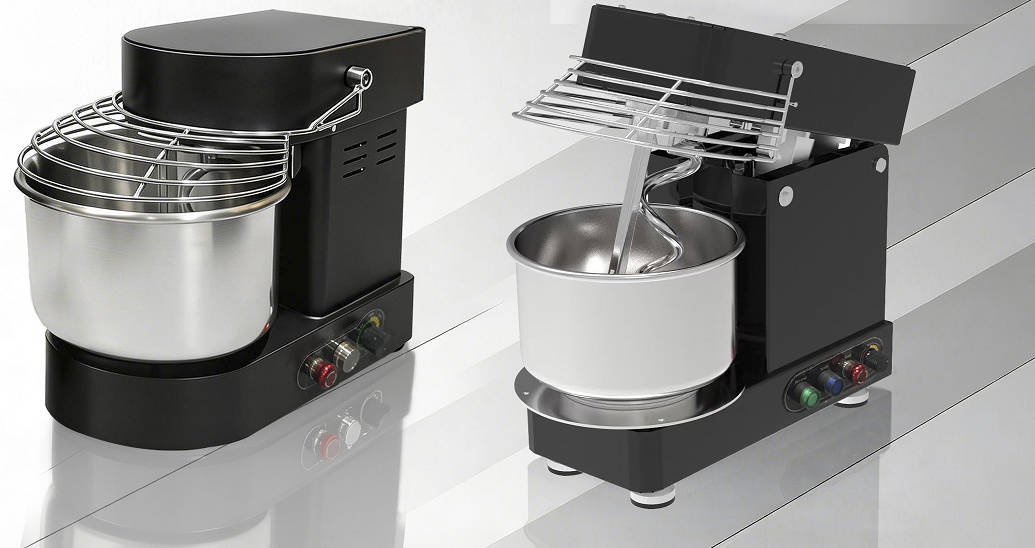
In the baking industry, professional bakeries, pizza shops and chain bakery stores mostly choose two-speed spiral dough mixers as their preferred equipment. So are two-speed spiral dough mixers truly ideal for baking? The answer is definitely yes. Designed with spiral structure and dual speed adjustment, this type of mixer is the optimal choice for making mainstream baked goods such as bread, pizza, toast and European-style bread. It is also widely recognized across the European and American baking industry as a cost-effective and highly compatible commercial baking appliance.
1. Figure Out the Core Standards of Baking Dough Making
Many new entrepreneurs mistakenly believe that a dough mixer only needs to blend flour, water and yeast evenly, which is a common misconception. Baking sets strict requirements on dough quality, which is the key to producing perfect baked goods.
First of all, it requires complete gluten formation and proper window test results. The taste of bread, toast and pizza bases fully depends on well-developed gluten. Qualified dough should form a tough and elastic gluten network that is not easy to break when stretched, turning out fluffy, tender baked goods with fine internal textures after baking. Ordinary dough mixers deliver unstable kneading force, which tends to break gluten and results in hard, collapsed and rough-textured finished products.
Secondly, dough temperature must be well controlled. High heat is the biggest enemy of baking dough. Excessive friction will raise dough temperature rapidly, causing premature yeast fermentation, sour dough and loss of original flavor, which will ruin the whole batch of raw materials. Professional baking workshops in Europe and America attach great importance to temperature control during kneading, which requires kneading equipment to work efficiently while generating low heat.
Thirdly, consistent dough texture is essential. Every batch of dough must keep the same firmness, humidity and elasticity to ensure unified taste of finished products and meet store production standards. Single-speed mixers feature fixed working force, failing to adapt to different types of flour and diverse recipes, which easily leads to unstable finished product quality.
The core design of two-speed spiral dough mixers fully meets these three vital baking standards and effectively solves various defects of traditional dough mixing equipment.
2. Why Dual-speed Design Is a Must-have for Baking
Most ordinary commercial dough mixers on the market are single-speed models with fixed rotating speed and single working strength. They can only finish basic mixing work and cannot satisfy the staged kneading demands of professional baking. Dough kneading is a refined step-by-step process that needs low-speed mixing first and high-speed kneading later. This core advantage makes two-speed spiral dough mixers highly popular and widely acknowledged by baking practitioners in Europe and America.
Under low-speed mode, the machine runs gently to fully mix raw materials including flour, water, yeast and sugar, enabling dry flour to fully absorb water and form dough. This process produces little friction, effectively preventing dough overheating and premature fermentation, and avoids flour splashing and uneven raw material blending. When dealing with hard-to-mix ingredients like high-gluten flour and whole wheat flour, low-speed mixing can best retain the original flavor and nutrition of raw materials and lay a solid foundation for gluten development. It is a safe working mode suitable for novice bakers and mass production.
The high-speed gear is the key to forming perfect gluten film. After raw materials are well combined into dough, switch to high-speed mode. The spiral mixing rod can continuously and evenly stretch, knead and fold dough to quickly build up gluten toughness and achieve complete gluten development in a short time. Compared with single-speed mixers, two-speed mixers maintain stable kneading strength and regular stirring tracks, avoiding over-kneading or insufficient kneading in partial areas. The well-kneaded dough features excellent ductility, perfectly meeting the production needs of stretchable toast, thin-crust pizza and fluffy soft European-style bread.
This staged kneading method combining low and high speed is completely in line with standardized baking procedures in Europe and America. It not only solves the low-efficiency problem of pure low-speed kneading, but also avoids gluten damage and excessive temperature rise caused by simple high-speed kneading, balancing working efficiency and finished product quality perfectly. This is why single-speed mixers can never replace two-speed ones in professional baking scenarios.
3. Spiral Structure Specially Tailored for Baking Dough
Apart from dual-speed regulation, the spiral stirring structure is another core advantage that makes this mixer ideal for baking, and it is also the main reason why professional European and American bakeries favor this equipment. Different from traditional planetary mixing structures, the stirring hook of spiral dough mixers simulates manual kneading tracks, covering a wider mixing range and ensuring more even force application on dough.
During operation, the spiral hook drives dough to roll, fold and knead repeatedly inside the mixing bowl, simulating professional hand kneading techniques of experienced bakers to knead dough thoroughly. Whether for small-batch trial production or large-scale mass production, it can ensure uniform gluten strength and softness of all dough. For popular Western baked goods such as thick-crust pizza, soft toast, butter bread and whole wheat European bread in Europe and America, dough kneaded by spiral mixers has stronger fermentation power, bringing higher fluffiness and chewier taste to baked products after baking.
In addition, the spiral structure runs stably with low wear. Equipped with high-power full-copper motors, it supports long-term continuous operation, perfectly fitting peak-hour production and bulk order processing in bakeries. The machine works with low noise and slight vibration without disturbing daily store operation, fully satisfying European and American bakeries’ core demands for quiet running, stable performance and long service life of baking equipment.
4. All-round Advantages Over Ordinary Dough Mixers in Baking Use
Many baking practitioners struggle with equipment selection mainly because they fail to clarify the applicable scenarios of different dough mixers. Based on practical application feedback from the European and American market, we can clearly see the performance gaps and confirm the outstanding baking compatibility of two-speed spiral dough mixers.
In terms of taste and quality, ordinary single-speed mixers follow irregular kneading paths and often destroy gluten structures, resulting in dense and hard bread without stretchability as well as stiff and tasteless pizza bases. In contrast, two-speed spiral dough mixers adopt staged kneading to keep complete gluten networks, producing fluffy and porous finished products with good stretchability, crispy texture and rich chewiness, which fully conform to local taste preferences of consumers in Europe and America.
In terms of working efficiency and material loss, single-speed mixers take more time to finish kneading. Prolonged friction easily heats up dough and makes it sour, leading to high raw material waste and increasing invisible operating costs. Two-speed mixers support flexible speed switching and raise kneading efficiency by more than 30%. They keep dough at proper temperature to avoid production failures, achieve nearly 100% raw material utilization rate, greatly cut down baking material loss and boost store profit margins.
In terms of durability and applicability, ordinary household and simple commercial dough mixers are equipped with low-load motors that are prone to overheating, stalling and frequent faults after long-hour use, unable to meet high-frequency commercial working demands. Two-speed spiral dough mixers are built with thickened stainless steel bodies, food-grade mixing bowls and waterproof full-copper motors. They are rust-proof, corrosion-resistant and easy to clean, complying with strict food hygiene standards in Europe and America, featuring longer service life and extremely low failure rate after sales.
5. Wide Application to Cover Mainstream Baking Demands in Europe and America
With strong universality, two-speed spiral dough mixers are applicable to almost all commercial baking scenarios in Europe and America, serving as all-purpose professional baking equipment. For small startup pizza stores and community bakeries, medium and small-sized two-speed spiral mixers feature compact size to save space, simple operation without professional skills required, which are easy for new starters to master and perfectly fit small-batch and diversified production needs.
For chain bakery stores, large-scale food processing factories and staff canteen kitchens, large-capacity two-speed spiral dough mixers realize full-bowl bulk dough mixing. Their high-power motors ensure stable continuous operation to efficiently fulfill large-quantity orders while guaranteeing consistent production speed and product quality. They can easily make dough for various foods including Western-style bread, toast, pizza, bagels and steamed buns. The multi-functional design greatly reduces equipment procurement costs for catering stores.
Besides, user-friendly designs such as easy-clean structure, intelligent timing function and overload protection function cater to European and American users’ demands for safe, convenient and efficient kitchen equipment, becoming core selling points for its hot sales in overseas markets. Made of food-grade stainless steel with no harmful substance residue, the mixer can be cleaned simply with clean water, fully meeting overseas food inspection standards and helping stores operate in a more standardized and worry-free way.
Back to the core question, after in-depth principle analysis, scenario matching and competitive product comparison, there is no doubt about the superiority of two-speed spiral dough mixers. It is far more than an ordinary dough mixing machine, but professional kneading equipment specially developed for commercial baking purposes.
Dual-speed operation solves core kneading difficulties, and bionic spiral structure delivers superior dough taste and quality. Compared with single-speed mixers and common planetary mixers, two-speed spiral dough mixers take the lead in dough quality, production efficiency, durability, cost performance and scenario adaptability, ranking as essential best-selling equipment for bakeries, pizza workshops and baking enterprises across Europe and America.