
Are Dual-Cup Hot & Cold Blenders Worth Buying? Full Analysis of Pros and Cons
May 21,2026
304
Nowadays, many household high-speed blenders come with dual hot and cold cups, featuring separate containers for hot drinks and cold beverages. They have become a popular household appliance. Many shoppers wonder whether it is a worthwhile purchase. This article objectively talks about its practical performance, advantages, drawbacks and suitable user groups.
1. What Is a Dual-Cup Hot & Cold Blender
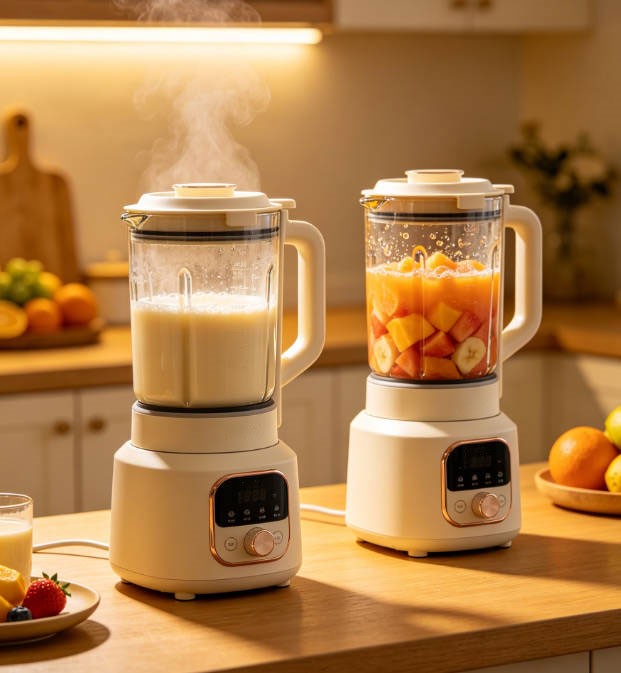
A standard dual-cup blender is equipped with two independent containers:
Heating Cup (Hot Cup): Made of high borosilicate glass, it supports heating, boiling and preset timing functions. It is ideal for making cooked hot drinks such as soy milk, rice paste, mixed grain porridge and health soups.
Cold Blending Cup (Cold Cup): Mostly made of food-grade durable materials without heating function. It is specially used to process cold raw ingredients including fruit juices, milkshakes, smoothies, dry powder, sauces and minced meat. Users can switch between the two cups freely instead of buying two separate machines, which makes storage much easier.
2. Core Advantages of Dual-Cup Hot & Cold Blenders
1. Separate Raw and Cooked Food Use to Avoid Flavor Mixing for Healthier Diet
This is its biggest highlight. The heating cup will retain grain and oily odors after long-term boiling of beans and cereals, while the cold cup keeps fresh flavors from fruits, ice desserts and meat. Separate usage completely prevents flavor cross-contamination. Your fruit juice will not taste like soy milk, and hot soy milk will have no sour fruit aftertaste, delivering purer taste and healthier daily diet for your family.
2. Clear Functional Division for More Targeted Use
The heating cup focuses on heating and simmering, ensuring smooth texture without burnt bottoms. It supports pre-soaking and gentle slow cooking, perfect for making hearty breakfast foods. The cold cup features high-speed pure blending performance, which works steadily when crushing ice and grinds dry ingredients into finer powder. It boosts efficiency in preparing beverages, baby food purees and seasonings, and also extends the service life of each single cup.
3. Greatly Simplified Cleaning Work
Cooked food tends to stick and cake on the inner wall of the heating cup, which can be cleaned independently. The cold cup only processes cold raw food and can be cleaned thoroughly with plain water in seconds. There is no need to repeatedly scrub greasy cooking residues, making daily maintenance effortless.
4. Multi-purpose Design with High Cost Performance
A single unit integrates all functions of soy milk maker, juicer, cold press juicer, grinder, baby food processor and food mixer. There is no need to purchase multiple small kitchen appliances separately. It saves kitchen space and fits well for renters, family houses and small-sized apartments.
5. Prevent Machine Damage Caused by Mixed Hot and Cold Use
Long-term use of the heating cup to crush ice cubes and thick smoothies may crack the glass container, damage the heating coating and shorten the machine’s lifespan. Using two cups separately matches different ingredients properly and effectively prolongs the overall service life of the blender.
6. Meet Diversified Dietary Needs of the Whole Family
Elderly family members prefer hot soy milk and nourishing grain paste; kids love fruity milkshakes and homemade baby purees; young people make detox juices for weight management and intermittent fasting. This dual-cup blender can satisfy all these demands and easily prepare various drinks for three meals a day.
3. Obvious Disadvantages of Dual-Cup Hot & Cold Blenders
1. Numerous Accessories Occupy More Storage Space
It comes with two cups, blade bases and cup lids, more accessories than single-cup blenders. It may look messy in homes with narrow kitchen countertops and limited storage room.
2. Cup Replacement Is Slightly Troublesome
You need to remove the current cup and install the matched one every time you switch between hot and cold drinks. Compared with all-in-one single-cup blenders with direct use, it adds an extra operation step, which is annoying for lazy users.
3. Slightly Higher Price Than Single-Cup Models at the Same Configuration Level
Under the same brand and power configuration, dual-cup blenders usually cost dozens to over a hundred dollars more than basic single-cup versions, so they are not cost-effective for users with extremely tight budgets.
4. Shared Blade Assembly Causes Lingering Odors on Some Models
Many dual-cup blenders adopt one shared blade set with only replaceable cups. The inseparable blades will still leave faint food odors, making it impossible to achieve complete odor-free use.
5. Single Function of Cold Cups
The cold blending cup only supports simple stirring and blending without any heating modes, so it cannot be used to simmer ingredients and has obvious functional limitations.
6. Heavier Weight Is Inconvenient to Carry
The full set of dual-cup accessories is relatively heavy. It is less portable than compact single-cup blenders for frequent moving or outdoor use.
4. Who Are Suitable to Buy Dual-Cup Hot & Cold Blenders
Recommended Crowds
Families of three or more members for daily home use
Households that attach importance to food hygiene and hate mixed food flavors
People who often make hot soy milk and grain paste for breakfast and love fruit juices and cold drinks
Users who want one appliance to replace various kitchen gadgets
Families with infants needing baby food and elders needing nourishing hot drinks
Not Recommended Crowds
Single dwellers who only make one fixed type of drink daily
People with tiny kitchen space unable to place extra accessories
Budget-limited users who only need basic soy milk making function
Users pursuing minimalist operation and dislike frequent part replacement
5. Practical Buying Tips for Dual-Cup Hot & Cold Blenders
Priority choose models with separate independent blades for raw and cooked food to completely eliminate residual odors.
Select heating cups made of thickened high borosilicate glass for better thermal shock resistance and safer use.
Pick cold blending cups made of thick drop-resistant materials that support effortless ice crushing.
Choose blenders equipped with self-cleaning, preset timing and noise reduction functions to optimize daily using experience.
Prefer well-known brand products with universal accessories for convenient cup replacement in later use.
If you have diverse daily diets and pay great attention to health and food hygiene, dual-cup hot and cold blenders are definitely practical enough. If you only need to simply make soy milk with single fixed usage scenarios, a basic single-cup blender is fully sufficient for you.